Enter text

Paste plain text or upload TXT/DOCX and we will turn it into a mind map.

0/40,000

UTF-8 TXT or DOCX; guests can use up to 40,000 characters, with longer input available after sign-in

Strategic analysis guide

Use SWOT to make choices, not merely fill four boxes

A SWOT analysis compares internal strengths and weaknesses with external opportunities and threats in relation to one objective. Internal factors are capabilities the organization can influence, such as brand trust, data, skills, process or cost structure. External factors arise from customers, competitors, regulation, technology and the economy. Keeping this boundary clear prevents a market trend from being called a strength or an internal delivery problem from being mislabelled as a threat.

The analysis becomes useful only when claims have evidence and priorities lead to action. Paste research, customer feedback, performance data, competitor notes and team observations. AI can group the material, but the team must remove duplicates, challenge unsupported opinions and state the time horizon. A factor can change category as circumstances change, so record the source and review date.

Evaluate factors relative to competitors and the stated objective. A capability is not a strength simply because the organization performs it well; it matters when it creates an advantage, removes a constraint or improves the chance of success. Likewise, an external trend is not automatically an opportunity. The team must have a plausible way to benefit from it within the available time, resources and permissions.

What makes a SWOT factor credible?

Write a specific condition, its evidence and its relevance to the objective. ‘Strong brand’ is vague; ‘62% unaided awareness in the target segment, measured in the June survey’ can be evaluated and compared.

How does SWOT lead to strategy?

Combine categories after prioritising them: use strengths to capture opportunities, overcome weaknesses to pursue opportunities, use strengths to reduce threats and limit exposure where weaknesses and threats reinforce each other.
SWOT example

From an unranked idea list to strategic launch choices

Before: mixed observations

Regional launch of an AI document tool

  • Strength: high conversion among existing document-upload users
  • Weakness: limited local-language onboarding and support coverage
  • Opportunity: new privacy requirements increase demand for browser-side processing
  • Threat: established competitors bundle similar features with office suites
  • Priority action: pilot one market where existing usage and partner support overlap

After: evidence-based SWOT map

SWOT Analysis Template

How to build your mind map

How to create an evidence-based SWOT analysis

Define the decision, collect evidence, classify factors and convert the highest-priority combinations into owned actions.

  1. 01

    Set one objective and time horizon

    State what is being assessed, for whom and over what period. ‘Evaluate entry into the Japanese market during the next 12 months’ produces more useful factors than ‘analyse our company’. Define the criteria that will make the analysis actionable.

  2. 02

    Collect and classify evidence

    Use performance metrics, customer research, operational data, competitor information and regulatory sources. Place controllable capabilities under strengths or weaknesses and outside conditions under opportunities or threats. Mark uncertain claims for validation.

  3. 03

    Prioritise by relevance and impact

    Merge overlapping points and rank factors by their effect on the objective, strength of evidence and urgency. Keep the shortlist focused; a long inventory gives minor observations the same visual importance as conditions that could change the decision.

  4. 04

    Create strategic actions

    Write SO, WO, ST and WT actions with an owner, first milestone and success measure. Test whether each action actually uses or addresses the cited factors. Export the map and revisit it when evidence or external conditions materially change.

Who it’s for

When SWOT analysis is the right tool

Use SWOT to frame a bounded strategic decision, not as a substitute for detailed market, financial or risk analysis.

Leadership and product teams

Assess a launch, market entry, annual strategy or product direction with a shared evidence base. The visual structure helps different functions challenge assumptions without losing sight of the decision being made.

Small teams and individuals

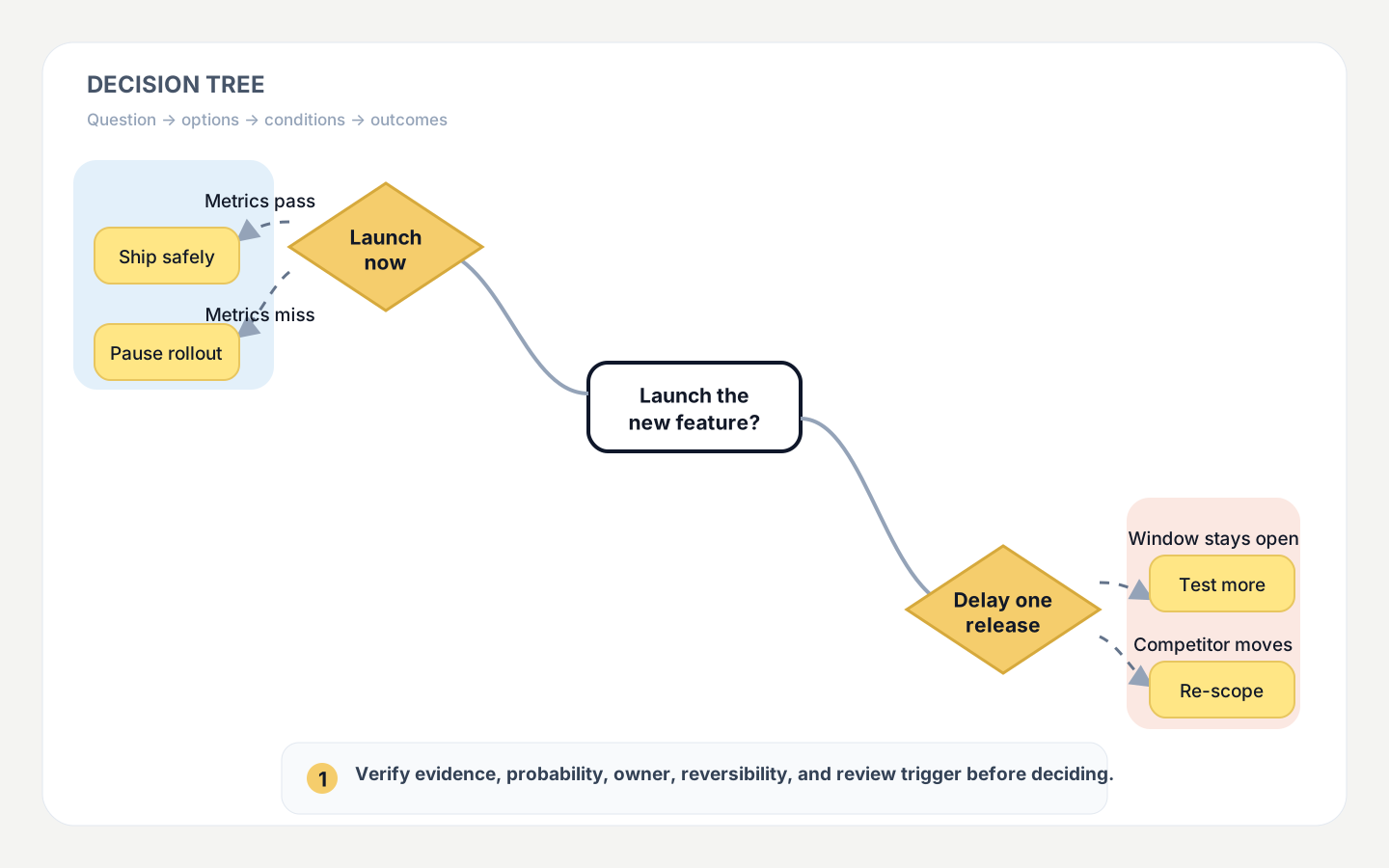
Compare career options, a new service or a team improvement plan, provided the objective is explicit. For choosing between defined alternatives, use a decision tree after SWOT has identified the relevant factors.

Practical guidance

SWOT analysis quality checklist

Avoid adjectives without comparison, factors that appear in several quadrants and opportunities that are merely internal wishes. Separate a fact from its interpretation: falling acquisition cost is evidence; ‘we have unbeatable marketing’ is a conclusion requiring context. Consider both favourable and unfavourable evidence, and invite people close to customers and operations rather than allowing only senior leaders to fill the map.

SWOT describes the strategic situation but does not calculate probability, financial return or implementation capacity. Follow it with market sizing, risk assessment, financial modelling or an action plan where required. Keep older versions when the analysis supports a major decision so later reviews can distinguish incorrect assumptions from changes in the environment.

Facilitate the review in two passes. First, ask contributors to score evidence strength and impact independently to reduce seniority bias. Second, discuss the differences and select the factors that alter a real choice. Write a short implication beside every retained factor. If nobody can explain what decision or action would change, the item probably does not belong in the final map.

Frequently asked questions

SWOT analysis template questions

Can the same factor appear in two quadrants?

Usually it should be rewritten to expose two different effects. A large team may be a strength because of expertise and a weakness because of cost. Record each effect separately with its own evidence and relevance.

How many factors should each quadrant contain?

There is no fixed number. Collect broadly, then retain the few factors that materially affect the objective. Five well-supported priorities are more useful than twenty generic statements with equal visual weight.

What is the difference between a weakness and a threat?

A weakness is an internal limitation the organization can influence, such as missing capability. A threat is an external condition, such as regulation or competitor movement. The response may address both together.

How often should a SWOT analysis be reviewed?

Review it before the decision, at major strategy checkpoints and when new evidence changes a priority factor. Fast-moving markets may need quarterly review; stable internal planning may need only an annual or event-driven update.